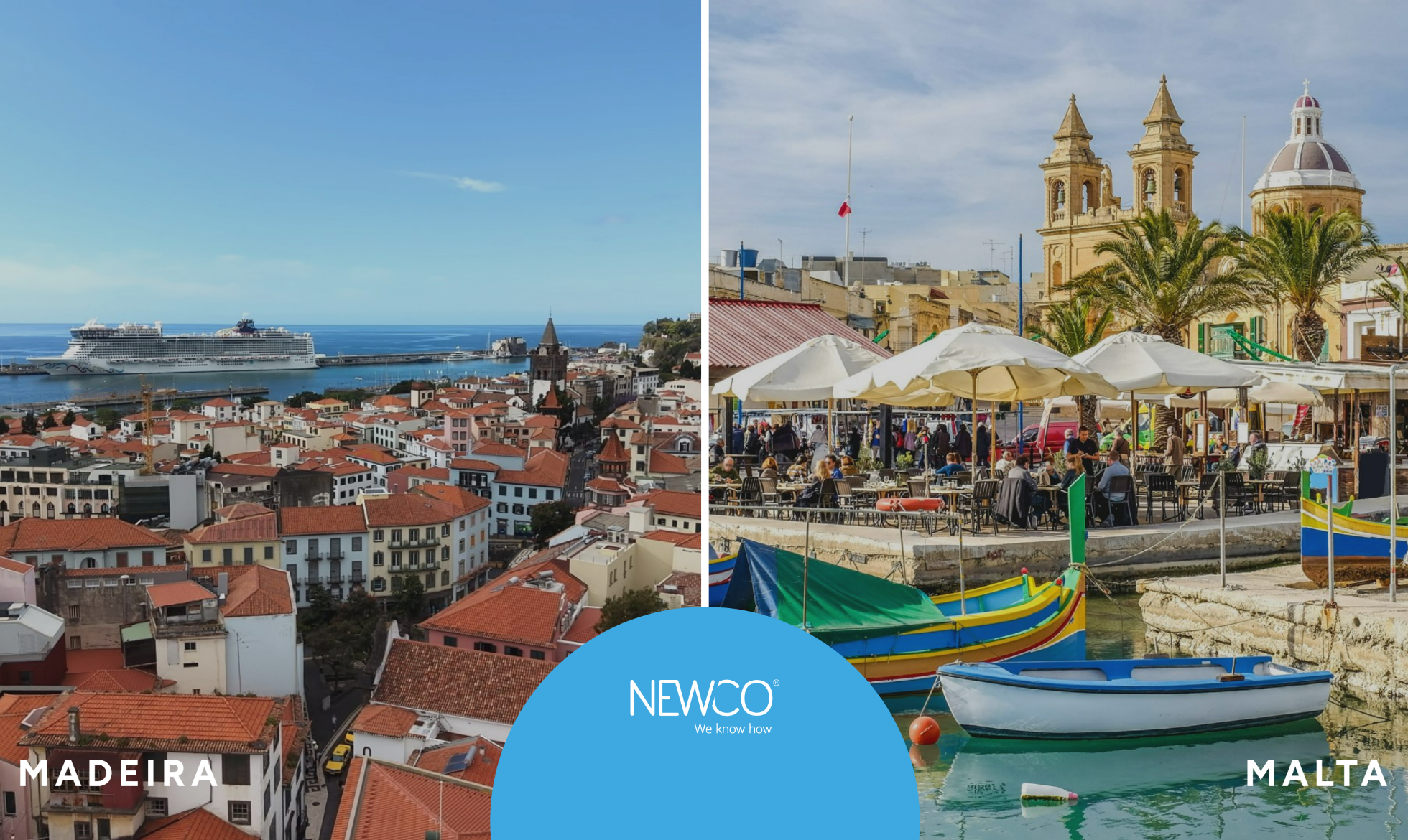
When we hear about Madeira’s tax system, we often think of its International Business Centre (Madeira IBC) and the ultra-competitive 5% corporate income tax (CIT) rate.
However, that’s not the only competitive option Madeira has to offer your company compared with Portugal’s mainland, because in 2026, Madeira has a CIT rate of 13.3%, compared with 19% in mainland Portugal. This is Madeira's general tax regime, not the IBC. There is no job-creation requirement, no restriction on activities and no minimum investment.
There are significant differences in tax rates between mainland Portugal and Madeira:
| Tax | Mainland Portugal | Madeira (general regime) |
|---|---|---|
| General CIT rate | 19% | 13.3% |
| SMEs and Small Mid Caps: first €50,000 of taxable income | 15% | 10.5% |
| SMEs in qualifying interior / low-density areas: first €50,000 | 12.5% | 8.75% (Porto Moniz, São Vicente, Santana and Porto Santo only) |
| Qualifying startups: first €50,000 | 12.5% | 8.75% |
| State / regional surcharge on taxable profit of €1.5m–€7.5m / €7.5m–€35m / over €35m | 3% / 5% / 9% | 2.1% / 3.5% / 6.3% |
| Municipal surcharge | Up to 1.5%, set by each municipality | Funchal (capital and major city) has applied a full exemption for several years |
Under the combined provisions of the Portuguese Constitution and the Regional Finance Law, Portugal's Autonomous Regions (Madeira and Azores) may reduce the national CIT rates by up to 30%. Madeira currently applies the full 30% CIT reduction.
The two examples below are illustrative only. They assume the 2026 tax year, with no tax losses or deductions, no autonomous taxation or tax credits, a mainland municipality levying the maximum 1.5% municipal surcharge (as in Lisbon), and a Madeira municipality levying none.
Example 1: an SME with €500,000 of taxable profit
| Item | Mainland Portugal | Madeira |
|---|---|---|
| CIT on the first €50,000 | €7,500 (15%) | €5,250 (10.5%) |
| CIT on the remaining €450,000 | €85,500 (19%) | €59,850 (13.3%) |
| Municipal surcharge | €7,500 | € 0 |
| Total tax | €100,500 (20.1%) | €65,100 (13.0%) |
| Annual difference | €35,400 |
Example 2: a larger company with €3,000,000 of taxable profit (not eligible for the SME rate)
| Item | Mainland Portugal | Madeira |
|---|---|---|
| CIT | €570,000 (19%) | €399,000 (13.3%) |
| State / regional surcharge on the €1.5m above the threshold | €45,000 (3%) | €31,500 (2.1%) |
| Municipal surcharge | €45,000 | € 0 |
| Total tax | €660,000 (22.0%) | €430,500 (14.35%) |
| Annual difference | €229,500 |
The CIT Code already sets the mainland rate at 18% for tax periods beginning on or after 1 January 2027, and at 17% from 2028.
Subject to the annual regional budgets, Madeira is expected to keep the maximum 30% differential, so its CIT rate should be 12.6% in 2027 and 11.9% in 2028.
The regional rate applies to profit attributable to:
Where a company has establishments simultaneously in mainland, Madeira or the Azores, its tax is split in proportion to the turnover generated by each establishment.
For example, if a company headquartered in Funchal generates 60% of its turnover through a Lisbon office, only the 40% generated in Madeira benefits from Madeira's rates.
One of the most common questions we get concerns a classic structure: real estate in mainland Portugal held through a Madeira company. The property is usually used for a business activity, most often short-term rentals. The question is always the same: can I benefit from the Madeira tax rate on the income from short-term rentals? The answer is no. This structure ticks several of the wrong boxes, and it simply doesn't work.

No. The Tax Authorities look at where the company is actually run. The law does not set out a fixed list of criteria, but some usual indicators include:
If the Madeira presence is artificial, the Tax Authorities can disregard it and apply mainland rates, plus interest and possible penalties. The court decisions upholding the regional rate all rely on evidence of a real connection to Madeira.
For companies that do not fit the IBC, Madeira's general regime can reduce the corporate tax burden by around 30% compared with the mainland.
We'll review your structure, work out the impact using your real figures, and guide you through the practical steps.
Book a call today!