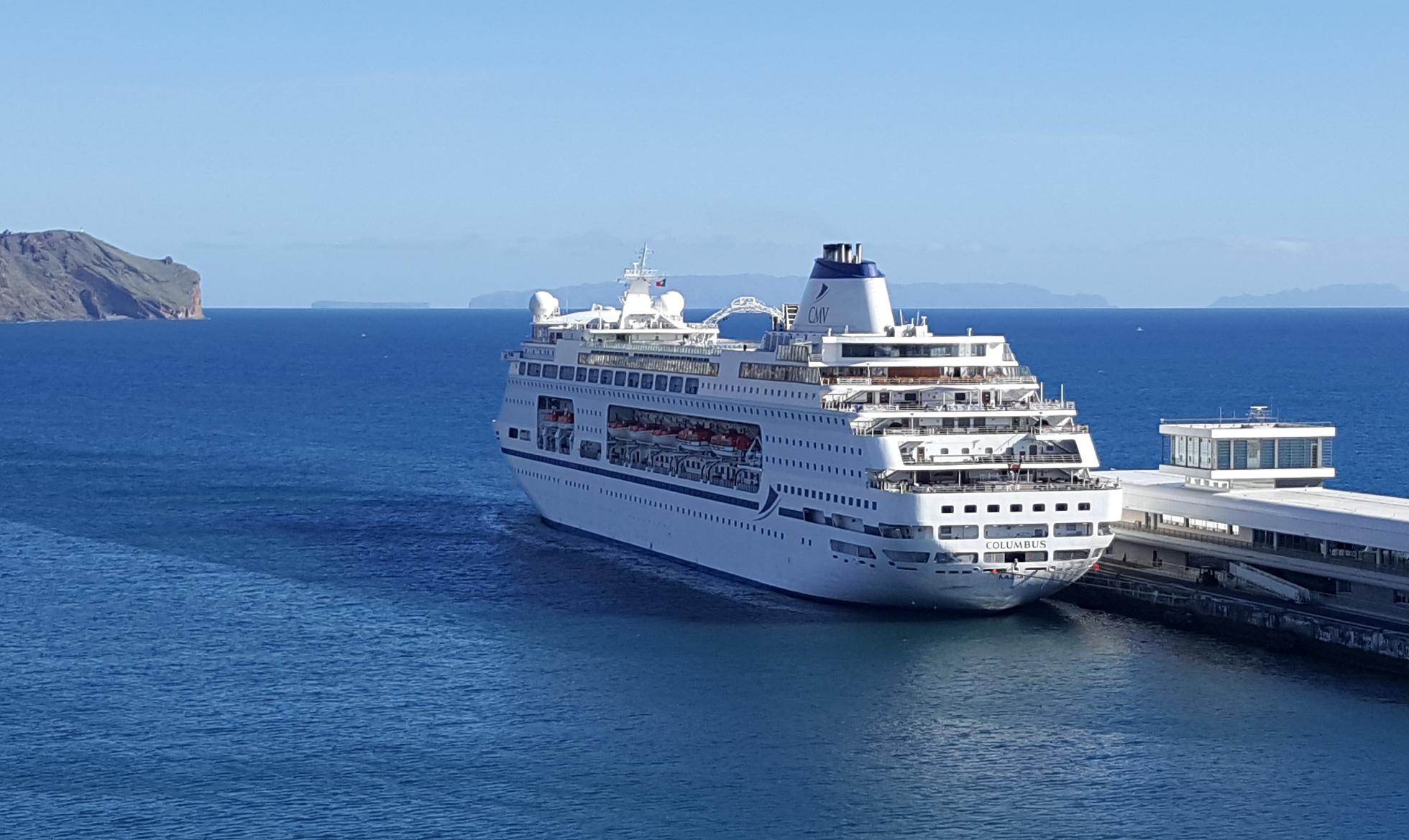
In October 2026, the Madeira International Ship Register (MAR) exceeded 30 million gross tonnes, having virtually doubled its fleet since 2020. The aim is to rank amongst the world’s ten largest shipping flags by 2027.
Portugal offers two special tax regimes: the Madeira regime, which combines registration with the MAR with a company licensed by the Madeira International Business Centre (Madeira IBC), and the tonnage tax regime.
Both were designed to attract the shipping industry, but they cannot be combined: shipowners will have to choose one.
Find out why.
Portuguese maritime transport is expanding. According to Informa D&B, companies in the sector generated turnover of 1.5 billion euros in 2025, 6 per cent more than in the previous year, and the Portuguese-flagged merchant fleet reached 1,190 vessels, an increase of 14.6 per cent. Portuguese ports handled 85.7 million tonnes of goods, an increase of 4.3 per cent.
To attract shipowners, Portugal has two instruments with different origins.
The first is the Madeira International Ship Register (MAR), established in 1989 under the Madeira IBC to stem the exodus of Portuguese ships to flags of convenience. Today it accounts for the overwhelming majority of the Portuguese-flagged fleet, and in 2025 the Regional Government ranked it as the third-largest register in Europe and the 11th largest in the world.
The second is the tonnage tax scheme, introduced in 2018 at a time when the conventional Portuguese register had fewer than ten ships.
This growth has been accompanied by quality. The Portuguese flag is included on the ‘white list’ of the Paris Memorandum of Understanding, which lists the flags with the best performance in port inspections, and in 2025 it rose five places to 17th position.
The choice is not limited to the registration of ships: the tax framework governing the activity and the crews is equally decisive. We present the two schemes in the same order to facilitate comparison.
The Madeira scheme is based on two elements: the registration of ships with the MAR under the Portuguese flag, and a shipping company licensed by the Madeira IBC. The first is open to any shipowner; the second is what grants access to the reduced corporate income tax rate.
The tax benefits of this scheme are intended for companies licensed by the Regional Government of Madeira to carry out maritime transport activities within the Madeira IBC.
The company may be incorporated in Madeira or, if foreign, operate through a branch or other form of representation licensed in the Region. Directors may be of any nationality and reside in any country.
Registration of ships with the MAR is, in itself, open to any shipowner, including companies without a licence in the Madeira IBC, whether domestic or foreign. If the registered office is outside Madeira, it is necessary to appoint a legal representative in the Region with full powers, including the power to accept service of process. Without a licence, however, the company does not benefit from the 5% corporate income tax rate or the exemption on shareholders’ dividends. It is the combination of registration with the MAR and a company registered with the Madeira IBC that allows the full benefits of the scheme to be realised.
To benefit from the reduced rate, the licensed company must commence operations within one year and must either create between 1 and 5 jobs and invest €75,000 in fixed assets, or create 6 or more jobs.
The requirements for setting up a company under the Madeira IBC scheme are the same as those for the MAR scheme.
Crew members on MAR vessels count as jobs, even if they do not reside in Madeira.
Commercial vessels (including tugs, auxiliary vessels and platforms), commercial yachts and pleasure craft, whether owned or chartered on a bareboat basis, in which case registration with the MAR is temporary.
Taxable profit is calculated in accordance with general rules and taxed at a corporate income tax rate of 5 per cent, regardless of the clients’ place of residence, compared with a standard rate of 19 per cent on the mainland and 13.3 per cent in Madeira in 2026. In addition, there is an 80 per cent reduction in Stamp Duty, Municipal Property Tax (IMI), Real Estate Transfer Tax (IMT) and surcharges.
Please note: The 5% rate applies up to a taxable base ceiling that depends on the number of jobs: from €2.73 million (1 to 2 jobs) to €205.5 million (more than 100). The benefit is also capped at 20.1 per cent of gross value added, 30.1 per cent of staff costs or 15.1 per cent of turnover.
With a taxable profit of €500,000, the company pays €25,000 in corporate income tax, compared with €95,000 at the standard mainland rate. In a year in which it makes a tax loss, it pays no corporate income tax.
Activities covered
This covers income from licensed activities, including the chartering of ships and the commercial hire of yachts.
Transport between Portuguese ports, however, is excluded and taxed under the general rules.
Period of validity
Companies licensed up to 31 December 2026 will retain the 5 per cent rate until 31 December 2033, pursuant to the 2026 State Budget. The successor scheme has not yet been approved.
Shareholders and dividends
Dividends from profits taxed at 5 per cent are exempt until 2033.
In shipping companies, the exemption also covers shareholders resident in Portugal; those resident in tax havens are excluded.
Crew members
Full exemption from personal income tax (IRS), with no minimum period on board, extended until 2033. Residents in Portugal must declare this income, which is not taxed but is taken into account when determining the personal income tax rate applicable to their other income (progressive exemption).
Under the social security system, the shipowner has flexibility: they need only guarantee crew members minimum cover for sickness, occupational illness and parental leave. Non-resident foreigners may be covered under any scheme, public or private, without making contributions in Portugal; nationals and residents contribute 2.7 per cent (2.0 per cent employer, 0.7 per cent employee), compared with 34.75 per cent under the general scheme, and may join the voluntary social security scheme.
At least 30 per cent of the crew must be Portuguese, European or from Portuguese-speaking countries.
Advantages
Introduced by Decree-Law No. 92/2018 and approved by the European Commission, this replaces taxable profit with a deemed profit, calculated on the basis of the fleet’s net tonnage. The tax depends on the size of the vessels, not on their results.
Companies with their registered office or place of effective management in Portugal whose main activity is maritime transport.
The option is selected via the Finance Portal and requires a minimum commitment of five years; those who opt out cannot rejoin the scheme for the following five years.
Ships flying the flag of an EU or EEA country, managed from within the EU or EEA. Ships from third countries are eligible provided that at least 60 per cent of the fleet’s tonnage flies a European flag.
The presumed daily profit for each ship is calculated in brackets:
| Net tonnage (NT) brackets | Presumed daily profit per 100 NT |
|---|---|
| Up to 1,000 NT | €0.75 |
| Between 1,001 and 10,000 NT | €0.60 |
| Between 10,001 and 25,000 NT | €0.40 |
| Over 25,000 NT | €0.20 |
Source: Decree-Law No. 92/2018, Annex, Article 5.
The amount, multiplied by the number of days of availability, is taxed at the standard corporate income tax rate (13.3% for companies in Madeira outside the Madeira IBC), without any deductions. There are reductions of 50% and 25% in the first two years of operation and of 10% to 20% for vessels over 50,000 NT with environmental investment.
A vessel of 50,000 NT generates €171.50 in presumed daily profit (€7.50 + €54.00 + €60.00 + €50.00), or €62,597.50 per year:
| Company location | Corporate income tax rate | Estimated annual corporate tax rate |
|---|---|---|
| Mainland Portugal | 19% | € 11,893.53 |
| Autonomous Region of Madeira | 13,3% | € 8,325.47 |
Amounts before any additional levies.
The tax rate is the same regardless of whether there are high profits or a loss.
There is no profit cap nor any requirement regarding the number of jobs. Ancillary income is only eligible for relief up to 50 per cent of each vessel’s transport revenue, and the chartered tonnage may not exceed 75 per cent of the fleet.
Activities covered
This covers the carriage of goods and passengers, the management and chartering of vessels, on-board services, submarine cables, marine research, towing and dredging. Port services, fishing, leisure and recreational activities remain subject to the general regime.
Duration
The scheme is valid for ten years, renewable subject to approval by the European Commission, and there is no deadline for joining.
Shareholders and dividends
There is no specific exemption: dividends are subject to the general rules, with withholding tax unless a qualifying holding or applicable Double Tax Treaty applies.
Crew members
Full exemption from personal income tax (IRS), provided the crew member spends at least 90 days on board per year. Here too, the exemption is applied on a progressive basis.
The general social security scheme applies, providing full cover, including unemployment benefit, at a rate of 6 per cent (4.1 per cent employer, 1.9 per cent employee). The difference is borne by the State.
At least 50 per cent of the crew must be Portuguese, from the EU, the EEA or Portuguese-speaking countries.
Advantages
The two laws prevent the accumulation of benefits. Decree-Law No. 92/2018 prohibits those who opt for the Tonnage Tax from benefiting from other incentives of the same nature, and the Madeira IBC scheme cannot be combined with benefits of the same nature provided for in other local, regional or national schemes.
In practice, a Madeira IBC company that opts for the Tonnage Tax loses the 5 per cent rate.
The choice is made on a company-by-company basis and should be carefully considered, as the Tonnage Tax requires a five-year commitment and the Madeira IBC scheme requires the licence to be valid until 31 December 2026.
The MAR is not exclusive to the Madeira IBC: a company under the Tonnage Tax may register ships with the MAR, which is a European register. The choice lies in the company’s tax regime, not in the register.
However, the register does have implications for crews. The Tonnage Tax crew regime applies to the conventional register and other EU registers, whilst the MAR rules apply to any vessel registered under it. Strictly speaking, a Tonnage Tax company with vessels in the MAR would have its crews subject to the MAR rules — a point to be confirmed by a binding opinion.
| MAR + Madeira IBC | Tonnage tax | |
|---|---|---|
| Access | Madeira IBC licence and jobs | Head office or place of effective management in Portugal; maritime transport as the main activity |
| Ships | Registered with MAR | EU/EEA flag; third countries subject to conditions |
| Tax base | Actual profit at 5 per cent | Deemed profit at the standard rate |
| Loss-making years | No corporate income tax | Tax payable |
| Activities | Licensed activity, except for transport between Portuguese ports | List set out in law |
| Limits | Ceiling per job and minimum limits | Accessories up to 50 per cent; chartered vessels up to 75 per cent |
| Duration | Licence valid until 2026; 5% until 2033 | Minimum of five years |
| Dividends | Exempt | General rules |
| Crew members’ personal income tax | Exempt, with no minimum number of days | Exempt, with 90 days on board |
| Social Security | 2.7% for nationals and residents; others under any scheme | 6%, full cover |
| Nationality | Minimum 30 per cent | Minimum 50% |
MAR, with a company registered under the Madeira IBC, tends to be better suited to those with variable results, international crews, yacht charter operations, or partners who value dividend exemption.
The Tonnage Tax is suited to large and consistently profitable fleets that would exceed the Madeira IBC thresholds, or to those who prioritise social protection for Portuguese crews.
As the choice is binding on the company, it is worth simulating both schemes using real figures — and, for the Madeira route, the window closes on 31 December 2026.
NEWCO has been supporting Madeira IBC companies since 1990. We can simulate both schemes for your fleet and handle the company’s licensing, management and tax compliance.